
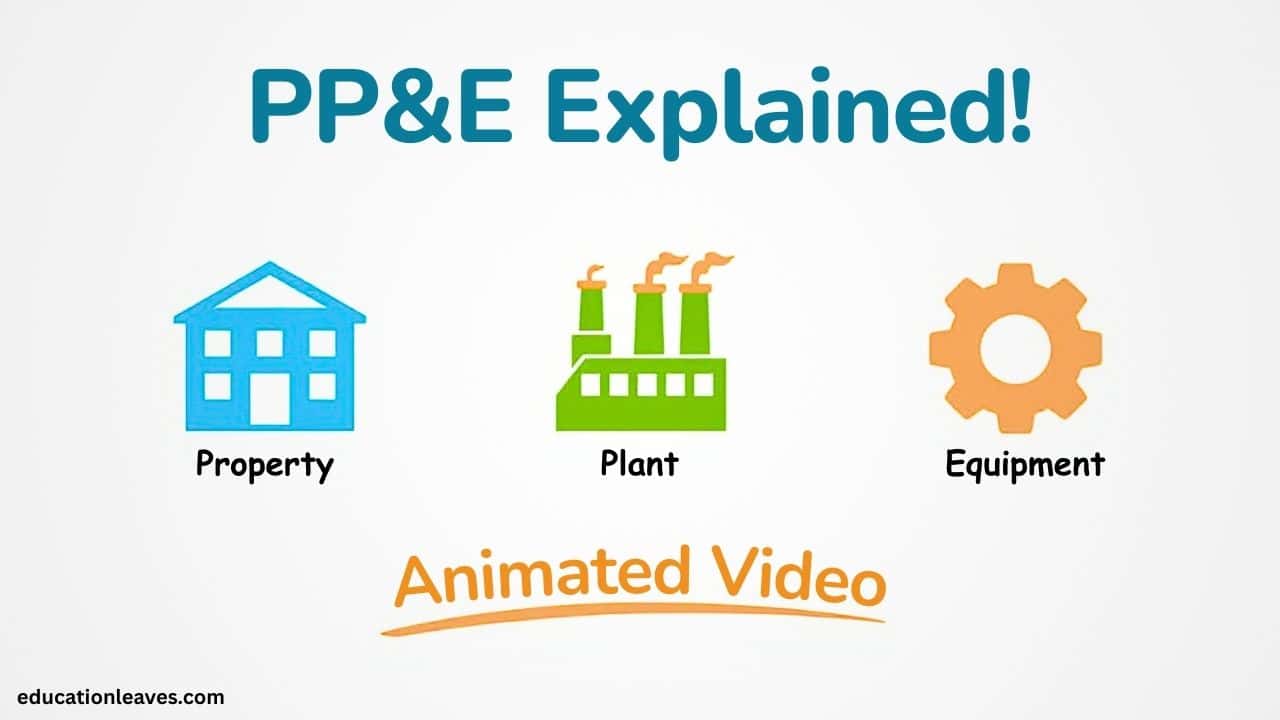
Property, Plant, and Equipment (PP&E) represents one of the most critical categories of assets on a company’s balance sheet, encompassing the tangible, long-term resources that businesses rely upon to generate revenue and sustain operations. These fixed assets form the operational backbone of enterprises across various industries, including manufacturing plants and machinery, as well as office buildings and vehicles.
Understanding PP&E is essential for investors, analysts, and business managers alike, as it provides valuable insights into a company’s capital investment strategy and long-term financial health.
What you are going to learn?
Defining Property, Plant, and Equipment (PP&E)
Property, Plant, and Equipment (PP&E) refers to non-current, tangible capital assets that companies hold for more than one year to support their core business operations. Unlike intangible assets such as patents or copyrights, PP&E assets are physical in nature and can be touched and observed. The term encompasses three primary components: property (including land and buildings), plant (such as machinery and manufacturing equipment), and equipment (including vehicles, office furniture, and computers).
These assets are classified as fixed assets because they are not intended for sale in the ordinary course of business but rather for long-term use in production, service delivery, or administrative functions. The defining characteristic of PP&E is that these assets are expected to provide economic benefits extending beyond a single accounting period.
Recognition and Measurement of PP&E
According to accounting standards such as IAS 16 and AS 10, a company should recognise an item as PP&E only when two fundamental criteria are met. First, it must be probable that future economic benefits associated with the asset will flow to the company. Second, the cost of the asset must be measurable with reasonable accuracy.
Initial Measurement at Cost
When initially recorded, PP&E is measured at cost, which includes not only the purchase price but also all expenditures necessary to bring the asset to its intended location and condition for use. This comprehensive cost calculation encompasses import duties, non-refundable taxes, delivery and installation charges, site preparation expenses, and initial testing costs.
Calculating Net PP&E
The net PP&E balance on a company’s balance sheet is calculated using a specific formula:
Net PP&E = Gross PP&E + Capital Expenditures – Accumulated Depreciation
Let’s break down each component:
- Gross PP&E represents the original cost of all property, plant, and equipment assets
- Capital Expenditures (CapEx) are investments in new assets or improvements to existing ones
- Accumulated Depreciation is the cumulative amount of depreciation expense recognised over the assets’ lifetimes, reflecting the reduction in value due to wear and tear
Depreciation: Allocating Cost Over Time
Depreciation is the systematic allocation of an asset’s depreciable amount over its useful life. This accounting technique does not reflect the actual loss of market value but rather matches the cost of the asset with the revenue it generates across multiple periods. The depreciable amount is calculated as the asset’s cost minus its salvage value, which is the estimated value remaining at the end of the asset’s useful life.
Understanding Depreciation as a Non-Cash Expense
It is important to note that depreciation is a non-cash expense. While it appears on the income statement and reduces reported profit, it does not involve an actual cash outflow. The cash outflow occurs at the time of the asset’s purchase and is recorded as capital expenditure on the cash flow statement.
The Exception: Land Does Not Depreciate
Land holds a unique position among PP&E assets as it does not depreciate over time due to its indefinite useful life. This makes land a particularly valuable long-term asset on a company’s balance sheet.
Common Components and Examples of PP&E
PP&E encompasses a diverse range of tangible assets depending on the nature and industry of the business. Common examples include:
- Land parcels and real estate holdings
- Office buildings and commercial structures
- Manufacturing facilities and factories
- Production machinery and industrial equipment
- Delivery vehicles and transportation fleets
- Computer systems and technology infrastructure
- Office furniture and fixtures
Industry Variations in PP&E Holdings
The composition of Property, Plant, and Equipment (PP&E) varies significantly across industries. Capital-intensive businesses such as manufacturing companies, oil and gas corporations, and construction firms typically maintain substantial PP&E balances, as these physical assets are fundamental to their production processes.
In contrast, service-oriented businesses like consulting firms or software companies generally have much lower PP&E investments, relying more on human capital and intellectual property.
Strategic Importance in Financial Reporting
PP&E plays a crucial role across all three primary financial statements:
- Balance Sheet: Reported as a non-current asset at its net book value
- Income Statement: Depreciation expense reduces reported profitability
- Cash Flow Statement: Capital expenditures for PP&E appear as cash outflows in the investing activities section
What PP&E Reveals About a Company
For financial analysts and investors, examining a company’s PP&E provides crucial insights into capital allocation efficiency, operational capacity, and competitive positioning. A growing PP&E balance typically indicates expansion and investment in future productive capacity. When management commits substantial capital to purchasing fixed assets, it demonstrates faith in the company’s long-term prospects and growth trajectory.
Understanding how PP&E is recognised, measured, depreciated, and reported is essential for stakeholders seeking to evaluate a company’s operational efficiency, investment strategy, and overall financial health.
PP&E Depreciation Methods Explained
Companies can choose from several depreciation methods, each affecting financial statements differently:
Straight-Line Depreciation
The most common method, straight-line depreciation, allocates equal expense amounts each year.
The formula is simple: (Cost – Salvage Value) / Useful Life.
For example, a $100,000 machine with a $10,000 salvage value and 10-year life would depreciate $9,000 annually.
Declining Balance Method
This accelerated depreciation method applies a fixed percentage to the declining book value each year, resulting in higher expenses early in the asset’s life. The double-declining balance method uses twice the straight-line rate and is popular for assets that lose value quickly, such as vehicles and technology equipment.
Units of Production Method
Manufacturing companies often prefer this method, which bases depreciation on actual usage rather than time. A delivery truck might depreciate based on miles driven, while production machinery depreciates per unit manufactured.
PP&E Impairment: When Assets Lose Value
Asset impairment occurs when an asset’s carrying value exceeds its recoverable amount. Companies must test for impairment when indicators suggest value decline, such as market downturns, technological obsolescence, or physical damage.
Recognizing Impairment Losses
When impairment is identified, companies write down the asset to its recoverable amount and recognize an impairment loss on the income statement. This non-cash charge reduces both profit and the asset’s book value, providing investors with a more accurate picture of asset worth.
Impact on Financial Analysis
Impairment charges can significantly impact financial ratios and profitability metrics. Analysts must distinguish between one-time impairments and ongoing operational issues when evaluating company performance.
PP&E Turnover Ratio: Measuring Asset Efficiency
The PP&E turnover ratio measures how efficiently a company uses its fixed assets to generate revenue. The formula is:
PP&E Turnover Ratio = Revenue / Average Net PP&E
A higher ratio indicates better asset utilisation, though acceptable levels vary by industry. Capital-intensive sectors like utilities naturally have lower ratios than asset-light businesses like retail or technology.
Using the Ratio for Investment Decisions
Investors compare PP&E turnover ratios across competitors to identify operational efficiency. Declining ratios over time may signal overcapacity, obsolete equipment, or poor capital allocation decisions, while improving ratios suggest enhanced productivity.
PP&E and Business Valuation
PP&E plays a critical role in various valuation methods:
Book Value Considerations
Net PP&E contributes to a company’s book value, forming the basis for price-to-book (P/B) ratio analysis. However, historical cost accounting means PP&E book values often diverge significantly from market values, particularly for real estate held long-term.
Replacement Cost Analysis
Analysts sometimes estimate replacement costs to determine a company’s true asset value. This approach is particularly relevant for insurance purposes and when assessing potential acquisition targets with undervalued physical assets.
Tax Considerations for PP&E
Tax treatment of PP&E differs from accounting treatment, creating deferred tax implications:
Accelerated Tax Depreciation
Tax authorities often allow accelerated depreciation methods or bonus depreciation, enabling faster cost recovery than financial accounting permits. This creates temporary timing differences between tax and book income.
Section 179 and Bonus Depreciation
In the United States, Section 179 allows immediate expensing of qualifying equipment purchases up to annual limits, while bonus depreciation permits first-year deductions for new asset purchases. These provisions significantly impact cash flows and investment decisions.
Capital Expenditures vs. Operating Expenses
Understanding the distinction between capital expenditures (CapEx) and operating expenses (OpEx) is crucial for PP&E management:
Capitalization Criteria
Expenditures that extend an asset’s useful life, increase capacity, or improve efficiency beyond original specifications should be capitalized as PP&E. Routine repairs and maintenance expenses are immediately expensed rather than added to asset value.
Strategic Implications
The CapEx vs. OpEx decision affects financial statements, tax liabilities, and key performance metrics. Some companies strategically lease equipment (OpEx) rather than purchase (CapEx) to maintain balance sheet flexibility and improve return ratios.
PP&E in Different Industries: Real-World Examples
Manufacturing Sector
Automobile manufacturers like Toyota and Ford maintain massive PP&E balances, including assembly plants, robotics systems, and specialised tooling. These companies often report PP&E representing 20-30% of total assets.
Oil and Gas Industry
Energy companies such as ExxonMobil and Chevron have among the highest PP&E balances globally, encompassing offshore drilling platforms, refineries, pipelines, and storage facilities. PP&E can exceed 60% of total assets in this capital-intensive sector.
Technology Companies
Software and internet companies like Google and Facebook maintain relatively modest PP&E balances focused on data centers and office facilities. Despite generating massive revenues, PP&E typically represents less than 15% of total assets.
Retail and Hospitality
Hotel chains and retail operators like Marriott and Walmart hold substantial real estate and store fixtures as PP&E. However, many modern retailers lease rather than own properties, significantly reducing PP&E balances.
Managing Property, Plant & Equipment (PP&E): Best Practices
Asset Tracking and Maintenance
Effective PP&E management requires robust tracking systems, preventive maintenance programs, and lifecycle planning. Modern enterprise resource planning (ERP) systems integrate asset management with financial reporting.
Disposal and Replacement Strategies
Companies must strategically time asset disposals and replacements to optimise tax benefits, maintain operational efficiency, and manage capital expenditure budgets effectively.
Common PP&E Mistakes to Avoid
Improper Capitalization
Incorrectly capitalising expenses that should be immediately expensed, or vice versa, distorts financial statements and can trigger regulatory scrutiny.
Inadequate Impairment Testing
Failing to recognise asset impairments promptly misleads investors about true asset values and future cash flow generation capacity.
Poor Useful Life Estimates
Overly optimistic or pessimistic useful life estimates lead to inappropriate depreciation charges, affecting profitability measurement and tax planning.
Key Takeaways
- PP&E represents tangible, long-term assets used in business operations for more than one year, including property, plant, and equipment.
- Net PP&E is calculated as Gross PP&E plus Capital Expenditures minus Accumulated Depreciation.
- Recognition requires two criteria: probable future economic benefits and measurable cost.
- Initial cost includes all expenses necessary to bring the asset to its intended use, not just the purchase price.
- Depreciation is a non-cash expense that allocates asset cost over its useful life, matching expenses with revenue generation.
- Land is the exception among PP&E assets, as it does not depreciate due to its indefinite useful life.
- PP&E composition varies by industry, with capital-intensive businesses maintaining higher balances than service-oriented companies.
- Growing PP&E indicates expansion, signalling management confidence in long-term business prospects.
- PP&E appears on all three financial statements, making it crucial for comprehensive financial analysis.
Frequently Asked Questions (FAQs)
What does PP&E stand for in accounting?
PP&E stands for Property, Plant, and Equipment. It refers to tangible, long-term assets that a company uses in its operations to generate revenue, including real estate, buildings, machinery, vehicles, and equipment.
How is PP&E different from current assets?
PP&E consists of non-current assets held for more than one year and used in operations, not intended for sale. Current assets, in contrast, are expected to be converted to cash or consumed within one year, such as inventory, accounts receivable, and cash itself.
Why doesn’t land depreciate like other PP&E assets?
Land does not depreciate because it has an indefinite useful life and typically does not wear out or become obsolete over time. Unlike buildings or machinery, land maintains its utility indefinitely, making it exempt from depreciation accounting.
What is included in the initial cost of PP&E?
The initial cost includes the purchase price plus all expenditures necessary to prepare the asset for use: import duties, non-refundable taxes, delivery and installation charges, site preparation costs, and initial testing expenses.
Is depreciation a cash expense?
No, depreciation is a non-cash expense. It reduces accounting profit on the income statement but does not involve actual cash leaving the company. The cash outflow occurs when the asset is initially purchased, recorded as capital expenditure on the cash flow statement.
How do investors use PP&E to evaluate companies?
Investors analyse PP&E to assess capital allocation efficiency, operational capacity, and growth strategy. Increasing PP&E suggests expansion and confidence in future prospects, while the PP&E-to-revenue ratio helps evaluate asset productivity and operational efficiency across competitors.
What industries typically have the highest PP&E balances?
Capital-intensive industries such as manufacturing, oil and gas, utilities, telecommunications, transportation, and construction typically maintain the highest PP&E balances because their operations depend heavily on physical assets and infrastructure.
Can PP&E be sold or disposed of?
Yes, companies can sell or dispose of PP&E assets when they’re no longer needed or have reached the end of their useful life. Any gain or loss on disposal is recorded on the income statement, calculated as the difference between the sale proceeds and the asset’s net book value.
What is the difference between CapEx and PP&E?
Capital Expenditures (CapEx) represent the cash spent to acquire or improve PP&E assets. CapEx is a cash flow item showing investment activity, while PP&E is the resulting balance sheet asset that appears after these purchases, net of accumulated depreciation.
How often should PP&E be reviewed or revalued?
While accounting standards vary, companies typically review PP&E for impairment annually or when indicators suggest value decline. Some jurisdictions allow revaluation to fair value, though most companies continue using the cost model with regular depreciation.